Showing posts with label chiropractor. Show all posts

Wednesday, November 9, 2011

Carpal Tunnel Syndrome, can Chiropractic Help?


How specific chiropractic care can help.

The major nerve controlling the thumb, index, and parts of the middle, and ring finger is called the median nerve. From the tip of your fingers, it travels through the bones in your wrist, past your elbow, up your arm, through your shoulder and neck, and finally to your spinal cord. Problems can develop in one or more of these areas.

The carpal “tunnel” is formed by bones in the wrist. The median nerve, tendons, and blood vessels pass through this opening. If one or more of the bones forming this tunnel should “collapse”, inflammation, nerve pressure, and painful symptoms can result.

The median nerve connects to the spinal cord through openings between several bones in the lower neck. When these spinal bones lose their normal motion or position, they can cause problems in the fingers and wrist.

After a thorough examination, your chiropractic doctor will perform specific adjustments where needed, to help normalize structure and reduce nerve irritation. When given time, conservative, chiropractic care has produced excellent results with carpal tunnel problems—without drugs or surgery.


Repetitive hand and wrist motion.

Every day, assembly line workers, keyboard operators, grocery store clerks, and many others, receive micro-traumas to their hands and wrists. Vibration and repetitive motions, when combined with spinal problems and other joint dysfunction, can result in a condition known as carpal tunnel syndrome.

Symptoms may include pain, numbness, tingling, weakness, or a loss of strength in the hands.

If placing your hands back to back produces an increase in numbness, tingling or pain, you could have a carpal tunnel problem.

Have someone try to pull your thumb and finger apart.
If your fingers seem weak, it could be related to a carpal tunnel problem.

Specific tests will be performed to see if spinal nerves are involved. Specific chiropractic adjustments can help return malfunctioning joints to a more normal motion and position.


THE CHIROPRACTIC LIFESTYLE


Chiropractors are experts in the care of the bones, nerves, muscles and connective tissues that make up about 60% of your body. All of the joints in your body are part of this musculo-skeletal system and its optimal function is necessary for overall good health. Schedule your appointment today with Dr. Craig French of Chiropractic Wellness at Brier Creek for more information about a care program that may include specific spinal adjustments, exercise recommendations, nutritional advice or other conservative methods of care based on your health history, age, current condition and lifestyle.

Tuesday, November 8, 2011

Posture and Ergonomics..

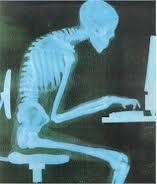
Is this you??
Practicing in the RTP area I see daily what the effects of sitting at the desk all day can bring. 

From the time we were children, we were often taught to have good posture - "Don't slouch, sit up straight, with your shoulders back".  Today, we know that having poor posture can have adverse effects on our nervous system which ultimately can lead to a multitude of chronic problems like carpal tunnel syndrome, recurrent headaches, neck and shoulder pain as well as mid and low back problems.  Contributing to this problem is the often overlooked importance of how we organize our workspace and materials around us, encapsulated in the term "ergonomics", which can adversely affect the stress and strain on our bodies.

Posture
No matter where we are and what we're doing and in what position we are in, there is an optimal position our body can and should be in to decrease stress on both the muscles, spine as well as the joints of the body.  If we are looking at posture in a purely natural state, that is without any external forces like chairs, etc., our posture is essentially determined by the boney structures of the spine and extremities as well as the muscles surrounding the joints and spine and their ability to counteract the force of gravity. 

"Proper posture" is somewhat of a subjective term, due to the fact that proper posture for one person may not be proper for another person, based on their body type, structural make up and other issues like prior muscle or bone surgery and other previous injuries.  However, a person's optimal posture is that which causes the least amount of strain and/or stress on their spine, ligaments, muscles and other joints of their body.  This means having one's body in a position where all joint surfaces whether they may be in the spine or in the knee in a neutral position.    

Some of the distinctive features of neutral posture are:
  
  • ¨ Head is balance over the spine (ears over shoulders)
  • ¨ Shoulders are straight (shoulders over hips)
  • ¨ Thumbs point forward
  • ¨ Pelvis is tucked in (hips over knees)
  • ¨ Knees stay over the feet (when bending)
  • ¨ Heels are perpendicular to the ground
In a perfect world, everyone would be in a neutral posture everyday, all the time.  But, in reality, the position our body's are in varies depending on what line of work we're in and what time of day it is.  It'll also vary quite a bit if in fact you've previously injured your back or neck. 

In a recent survey by GRD BioTech, Inc., poor posture was most frequently blamed on:

  • 1. Lack of exercise
  • 2. Weak muscles
  • 3. Obesity
  • 4. Lack of body awareness
  • 5. Excessive pronation (or rolling in) of the feet
 If you find that any of these issues are of a concern to you, there may be undue stress and wear and tear on your body that you don't need to endure.
So....What's The Solution?
 
If like many people, you work in an office......,   If you're a student or you're a seasoned hiker/backpacker and carry a full load of books or gear everyday this is for you.
 
What Can I Do Proactively?
Most importantly, you should be evaluated so that your current posture can be established and risk factors or weak points can be identified.  Consult with Dr.Craig French on  specific strengthening exercises you can do to strengthen your postural muscles and improve your overall balance.  Or, if you're suffering from sleepless nights or have trouble with your sitting during the day, consult our office to get helpful tips. 
 
Are You A Student or Do You Do A Lot of Desk Work?
What pains me more than anything is seeing a student studying while lying on their stomach or with their neck cranked by having their notes on their desk.  A simple solution would be to pick up a note or book prop/document holder at your local office supply store and place your work on it to relieve the stress on your neck and spine.  And above all, work and study while sitting in a proper chair and absolutely not while lying down.  

 
 Ergonomics
 
Definition - the study of the relationship between individuals and their work or working
                    environment, especially with regard to fitting jobs to the needs and abilities
                    of workers.  The essential nature of ergonomics is the convergence of human
                    biology (especially anatomy, physiology, and psychology of problems of 
                    Man at work) (New Scientist). - The World Book Dictionary Volume One
                    A-K, 1983 Doubleday & Company, Inc.
 
Ergonomics is about organizing the workplace to fit the worker.
The origin of the work comes from Greek: "Ergon" is work and "Nomos" is natural laws.  This means re-adjusting your equipment and workplace to fit your needs, and becoming more aware of your posture in your work environment.  

Why Should I Care?
 
  • ¨ Having proper ergonomics at your workplace is crucial to having proper posture.
  • ¨ To help prevent Repetitive Strain Injuries (RSI) such as Carpal Tunnel Syndrome
  • ¨ To help prevent other ailments such as headaches, eye strain, back and neck strains
  • ¨ To help reduce stress
  • ¨ To help increase productivity
Weather you work at a lumber mill or as a computer programmer, ergonomics plays an extremely important role in helping you to do your job efficiently as well as with the least amount of stress/strain on your body. 
With the explosion in the use of computers or video display terminals over the last 20 years, much of ergonomics research has been focused on this area.  In particular, how improper ergonomics can lead to visual problems and fatigue and musculoskeletal problems.
Think It's Not A Problem?
Check out these stats..........
.....ergonomics-related injuries still account for one third of all workplace injuries, and they result in the longest absences from work - a median of 27 days in the case of carpal tunnel syndrome.   Puget Sound Business Journal, April 6-12, 2001
 
According to the Occupational Health & Safety Administration (OHSA), 1.8 million workers have musculoskeletal injuries related to ergonomic factors, and 600,000 people miss some work each year because of them.  The Seattle Times, November 12, 2000
 
"The consequences of these injuries are serious at work and at home.  A worker with numb hands can't firmly grip work tools or a toothbrush.  A worker with an injured back can't lift boxes at work or their children at home".
                                                            Michael Silverstein, M.D.
                                                            Assistant Director, WISHA Services Division
                                                            Department of Labor and Injuries - Washington
 
The Worst Jobs For Ergonomic Injuries
 
Occupation                                                Number of Musculoskeletal Disorders
(1) Nursing Aides, orderlies, attendants            44,300
(2) Truck Drivers                                            41,700
(3) Nonconstruction Laborers                           32,800
(4) Assemblers                                               17,900
(5) Janitors and Cleaners                                 14,100
(6) Registered Nurses                                      13,100
(7) Stock handlers, baggers                              12,400
(8) Construction laborers                                  11,000
(9) Cashiers                                                      9,700
(10) Sales supervisors, proprietors                      9,300
Source: Bureau of Labor and Statistics 2001
What Can I Do?
While setting up one's workstation varies greatly from individual to individual, very general tips and guidelines should be addressed.  

Keyboards: Your wrist position is key 
Many agree that the ideal computing position is to be sitting upright or slightly reclined.  Your shoulders should be straight, upper arms hanging straight down, close to your body, and elbows at a 90-degree or greater angle.  Your forearms and hands should b flat and your hands relaxed......this leaves your wrists in a neutral position.  There are various ergonomically designed designed split keyboards that are becoming increasingly popular that help with your wrist position. 

Mouse: Does it fit your hand?
Not only do people's hands come in all different sizes, so do mice.  When looking for a mouse to purchase, look for one that isn't too big or too small but one that fits snugly under your relaxed hand.  The bottom of your hand should feel the mouse, and the point where your hand turns into your wrist should be on the table.  Most importantly, it needs to fit well enough so you can click easily and know the click is successful.  This helps to minimize stress on the wrist and shoulder.  For those suffering form wrist and/or shoulder pain, there are foot-operated mice on the market that may be worth looking at. 

Monitor: eye level and minus glare
If your monitor isn't positioned correctly, your computer monitor can cause neck pain, shoulder pain, and eyestrain from glare.  As a general rule, you should keep it in front of you such that you don't have to turn your head either way to look at it straight on and it should be at an arm's length in distance.  Your neck should be straight, not leaning forward.  The top of the screen should be directly level with your eyes.  The monitor should be tilted slightly upward. Another important component to your monitor to consider is glare.  Poor positioning related to your windows or lighting could result in eyestrain and headaches.  Adding a glare filter to your monitor can also minimize the affects of improper lighting. 

Document Holders: an absolute necessity
Using a document holder near the monitor near the monitor will help keep your neck in neutral position and helps you to avoid awkward straining. 

Chair: most important component?
A proper adjustable chair is the most important part of your workstation, because it affects your position more than just about anything else.  You want a chair that allows you to customize the fit.  A preferable chair is one that allows you to sit up straight or slightly reclined with your back snug against the back of the chair one that supports your low back comfortably.  Your feet should also be flat on the floor or on a foot rest. 

Using Phones A Lot?
Yes, that's for all you office and tech support people.  A headset is an absolute necessity if you are on the phone a lot.  Taking steps to make your workstation ergonomically correct, but cradling the phone on your neck for long phone calls doesn't make sense. 

Time Management
Our body is not designed to be in one place, doing one thing for long periods of time.  So, it's important to schedule breaks from repetitive activities and learn stretches that reduce fatigue in your muscles.  As a general rule of thumb you should get up at least once every 1-2 hours and stretch and walk around a bit to keeps the circulation in your legs going.  A great idea is to get up and get some water. 
 
Where Should I Start?
There are a lot of resources at stores like Relax The Back Store, Office Max and Office Depot which carry a wide assortment of ergonomically correct products that will save you time and money in the long run.
For more information on ergonomics call Dr. Craig French  to help evaluate your work habits.  


Monday, October 10, 2011

Whiplash and Auto Accidents.

Neck injuries caused by a rapid movement of the head backward, forward, or side to side, is referred to as "Whiplash." Whether a result of a car accident, sport, or work injury, whiplash or other neck injuries warrant a thorough chiropractic check-up. The biggest danger is that the symptoms can take years to develop. Too often people don't seek treatment until more serious complications develop. Even after whiplash victims settle their insurance claims, between 39%-56% report they still suffer with symptoms two years later. But they don't report it because they are not feeling any symptoms at the time.

In the past, a typical whiplash injury where no bones were broken, was hard to document. Soft tissue injuries do not show up on x-ray and insurance companies would deny coverage. Literally adding insult to injury, the patient suffering all too real pain was considered to be a fraud, a liar, or at best a hypochondriac. New imaging devices (CAT Scans, Magnetic Imaging, and Ultra-Sound) may now show soft tissue injury and now insurance companies cover most whiplash injuries.

When no bones are broken  and the head doesn't strike the windshield, typical symptoms are as follows: 92% complain of neck pain, which typically starts two hours up to two days after the accident/injury. This is often the result of tightened muscles that react to either muscle tears or excessive movement of joints from ligament damage. The muscles tighten in an effort to splint and support the head, limiting the excessive movement.
About 57% of those suffering from whiplash complain of headaches. The pain may be on one side or both, on again off again or constant, in one spot or more generalized. These types of headaches, like the neck pain, are often the result of tightened, tensed muscles trying to keep the head stable and, like tension headaches, they are often felt behind the eyes.

Shoulder pain often described as pain radiating down the back of the neck into the shoulder blade area, may also be the result of tensed muscles, accounting for 49% of injuries caused by whiplash.

Muscle tears are often described as burning pain, prickling or tingling. More severe disc damage may cause sharp pain with certain movements, with or without radiation into the arms, hand and fingers, which are relieved by holding your hand over your head.


Why Chiropractic?

Chiropractic treatment is one of the only proven effective forms of care in the treatment chronic whiplash related injuries.  Through the use of carefully controlled pressures directed at the spine and various physical therapy modalities, combined with that of exercise and nutrition, whiplash sufferers have a better outcome. This is also known as chiropractic rehabilitation, and is the unique domain of the chiropractic physician.
Studies have demonstrated that without proper movement within the fixated spinal joints, osteoarthritis of the spine and nerve root complications may be accelerated.  If you have suffered any type of whiplash injury please Dr. Craig French of Chiropractic Wellness at Brier Creek a call at 919-596-2900.

Friday, October 7, 2011

Improving your lung capacity.

Proper breathing is essential during exercise but should you try to increase your lung capacity? It seems like the average person who exercises regularly wouldn't concern themselves with increased lung capacity the way an endurance athlete would. However, improving your own lung capacity can benefit you when you are working out. Even if you have no plans to race in a triathlon, you can reap the benefits.

Most athletes work on improving their lung capacity because in turn, it increases their endurance and stamina. If you exercise on a regular basis, you may notice an increase in your own endurance and stamina by improving your lung capacity.

Ways to Increase Lung Capacity

You cannot physically increase the size of your lungs but there are ways to improve the efficiency of your lungs. The average person's lungs holds between 4 - 6 liters of air. Lung capacity also varies on height, age, sex, weight, as well as physical activity. For example, a swimmer would have a much larger lung capacity than someone who only works out a few times a week.

Cardio Exercises

One of the most common ways to improve lung capacity is through regular cardio exercise. Running is a good exercise to begin with. Some runners purposely live or train in areas of higher altitude because there is less available oxygen. The body then has to adapt to training with the lack of oxygen which in turns increases lung capacity. However, this can be dangerous as there is the risk of altitude sickness when the lungs cannot process enough oxygen for the body.

Breathing Exercises

Another method is by performing breathing exercises. Yoga is often turned to for learning how to breathe better. One breathing exercise I practice often is deep belly breathing. It really helps to relax me when I am feeling anxious or stressed. I once read that the average person does not breathe properly and that we lose lung capacity as we age. Breathing exercises are probably beneficial for those reasons.

Improve Your Posture

Having good posture also helps to improve lung capacity because when you are slouching over you constrict the amount of air your lungs take in. Practice sitting and standing with correct posture. To have your posture evaluated make and appointment with Dr. Craig French today!

It should go without saying but smoking reduces your lung capacity among the other negative side effects. I think improving one's lung capacity wouldn't hurt. Have you purposely tried increasing your own?

Thursday, October 6, 2011

Yoga benefits breast cancer and menopause patients!

In support of Breast Cancer Awareness Month, the benefits of Yoga and Breast Cancer patients.


In addition to helping you achieve a better body, yoga can make a significant difference in a woman's sense of well-being, even—and especially—when dealing with serious health challenges.

Recent research from India found that yoga can have a positive impact on menopause symptoms. The study followed a group of women who practiced the postures, breathing and meditation associated with yoga, while also listening to lectures on managing stress with yoga; a second group of women were assigned basic stretching and strengthen exercises, and listened to lectures on nutrition, fitness, and the biology of menopause.

In two months, the women in the yoga group had fewer hot flashes, fewer night sweats and less difficulty sleeping, while the women in the non-yoga group showed no changes.

Likewise, breast-cancer patients who attended a 10-week yoga program reported feeling notably less depressed and more calm, whereas women who were waitlisted did not report feeling any better during that time.

Interestingly, the research found that those who start out with the most negative outlook appear to have the most positive outcome after practicing yoga.

Wednesday, October 5, 2011

Heel Pain and Chiropractic!!

We all know that movement is good for the whole body, right?  From our head to our toes, our good health is determined by how much physical activity we get on a regular basis. So, why do so many people suffer from aches and pains in their feet? After all,  our feet were made for walking, but they weren’t designed for abuse. The average, healthy person takes 3,000-5,000 steps each day, not including activities such as running and jumping exercises like aerobics. But, often those steps are made by people walking incorrectly, with poor gait patterns and bad posture. In addition, a large number of people wear badly-designed, poorly-fitting shoes. Moving the body through space incorrectly on feet that are inhibited from functioning correctly cannot help but to cause aches and pains not only in a number of places in our feet, but in other parts of our body.  For example, if an individual over-pronates (walks like a duck) in a pair of poorly made or unevenly-worn shoes, or in a pair of  heels, that person is not only likely to develop foot and ankle problems, but will probably experience problems of the back, knees and legs.
One of the most well known foot problems is Plantar Fascitis (heel pain), which is usually caused by inflammation of the plantar fascia. The plantar fascia is a multi-tasking band of connective tissue that encircles the muscles on the bottom of the foot, adheres the heel bone to the ball of the foot, supports the arch, protects the foot, and absorbs shock.
There are many factors that contribute to the development of Plantar Fascitis. One such factor is short and tight calf muscles. When calf muscles get short and tight they exert a strong pull on the back of the heel bone, producing undue stress on the smaller and weaker plantar muscles and fascia. How do calf muscles get short and tight? In addition to running and jumping activities such as aerobics, volleyball, running, and tennis, the wearing of high heels can cause the problem as well.
Other factors that contribute to Plantar Fascitis include sudden strenuous activity after a period of prolonged inactivity, abnormal walking patterns (such as over-pronation), improper footwear, walking on hard or uneven surfaces (especially barefooted or wearing flip-flops), and obesity.
Once an individual develops Plantar Fascitis, the condition is frequently not easy to manage and can become very painful and persistent. If you are suffering from heel pain, your chiropractor will be able to determine the cause of your problem and what chiropractic management is best suited. Such care might include ultrasound therapy, laser, joint manipulation, muscle stretching and strengthening exercises, special taping and, in some cases, orthotics.